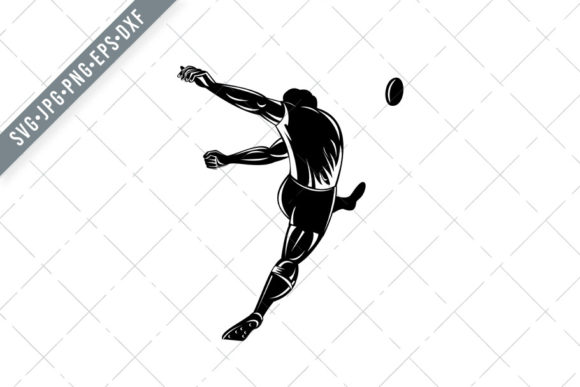
Rugby Player or Kicker Kicking Ball: Retro Woodcut Style Illustrations for Creative Design Projects
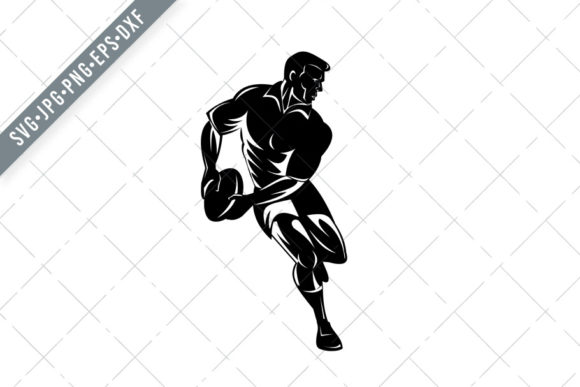
If you have ever searched for a design asset that captures raw athletic motion with a timeless, handcrafted feel, the Rugby Player or Kicker Kicking Ball illustration in retro woodcut style offers exactly that. This black-and-white artwork, viewed from the rear or back on an isolated background, blends the energy of sport with the texture of vintage printmaking. Whether you are a professional designer, a hobbyist crafter, or a small business owner looking to expand your product line, this single illustration opens the door to countless creative applications.
The appeal lies not only in the subject matter but also in the file versatility that comes with it. The complete set includes SVG, PNG, DXF, EPS, and JPG formats, each optimized for different tools and workflows. With a minimum size of 10 inches at 300 dpi for the PNG, you get print-ready quality right out of the box. In this article, we explore what makes this illustration unique, where it fits best, and how to evaluate whether it suits your specific project needs.
What Is the Retro Woodcut Style Rugby Illustration?
The illustration depicts a rugby player mid-kick, seen from behind. The perspective emphasizes the player’s posture, the follow-through of the leg, and the connection with the ball. The retro woodcut treatment uses bold black lines, cross-hatching, and negative space to mimic the look of an antique wood engraving. This is not a flat vector silhouette; it is a textured, expressive piece that carries the weight of traditional print media.
Because the artwork is rendered in black and white and placed on an isolated background, you can drop it into any layout without worrying about color clashes or background removal. The rear-view angle also adds a sense of anonymity, letting the viewer focus on the action rather than a specific player identity. This makes the illustration suitable for both generic sports themes and more personalized projects like team logos or event posters.
Key Characteristics of the Design
- Black-and-white retro woodcut aesthetic – thick contour lines, engraved shading, and high contrast that works well on light or dark substrates.
- Rear-facing perspective – shows the player from behind, emphasizing form and motion over facial features.
- Isolated background – no distracting elements, making it easy to composite into other designs.
- Scalable vector core – SVG and EPS files allow infinite resizing without quality loss, while the PNG offers a fixed high-resolution raster option.
- Multi-format delivery – SVG, PNG, DXF, EPS, and JPG are all included in a single zip download.
File Formats Explained: Which One Should You Use?
Having five file types in one download eliminates guesswork. Each format serves a specific purpose, and understanding the differences helps you get the most out of the asset without frustration.
SVG Vector File
The SVG is the star of the set for digital cutting machines. It works directly with Silhouette Studio Cameo, Cricut Design Space, and other vector-based software. Because SVG files store shapes as mathematical paths, you can scale the rugby player from a small sticker to a large poster without pixelation. The isolated lines are clean enough for single-layer cuts, and the black-and-white nature makes it ideal for weeding and transfer.
PNG File (300 dpi, 10+ inches)
The PNG is a high-resolution raster image with a transparent background. At 300 dpi and at least 10 inches on the longest side, it is ready for commercial printing. Use this for print-on-demand products like mugs, T-shirts, or wall art where you want the woodcut texture to remain crisp. The transparency also means you can stack it over colored backgrounds or photographs without cutting out the white space manually.
DXF File
DXF is a CAD-oriented format that many laser engravers, plasma cutters, and older vinyl cutters support. If you are producing wooden signs, acrylic stencils, or metal plaques, the DXF version provides the same vector geometry as the SVG but in a format that specialized machinery can read. It preserves the linework needed for etching or routing.
EPS File
EPS is a legacy vector format that remains valuable in professional print workflows. Programs like Adobe Illustrator, CorelDRAW, and Affinity Designer open EPS files natively. If you are creating a multi-page catalog, a large-format banner, or a publication that requires embedded vector art, the EPS file gives you compatibility without conversion errors.
JPG File
The JPG is a compressed raster image with a white background. It is useful for quick previews, mockups, or insertion into documents where transparency is not required. While the JPG does not share the same editability as the vector formats, it serves as an immediate visual reference or a low-stakes placeholder during draft work.
Practical Applications Across Industries
The combination of sports subject matter and retro print style makes this illustration exceptionally versatile. Below are real-world scenarios where the asset adds value.
Apparel and Fashion
Imagine a T-shirt with the rugby player screen-printed in white ink on a heather grey fabric. The woodcut lines create a vintage sportswear look that fits both athletic brands and casual lifestyle lines. Because the illustration is single-color by nature, you avoid the cost of multi-color screen printing. The same artwork can be heat-pressed onto hoodies, tote bags, or caps using the SVG or EPS file as the source.
Home Decor and Wall Art
Print the PNG at 12x16 inches on matte fine art paper and frame it for a man cave, a children's sports-themed bedroom, or a pub. The black-and-white palette is neutral enough to complement industrial, rustic, or modern decor. You could also use the DXF file to etch the design into a wooden plaque or acrylic panel for a dimensional wall piece.
Event and Party Supplies
Hosting a rugby tournament watch party or a sports-themed birthday? The illustration works on invitations, banners, cupcake toppers, and scrapbook pages. Because the design is isolated, you can resize it to fit small card fronts or large backdrop banners. The black-and-white style also pairs well with team colors added digitally without clashing with the artwork itself.
Digital Design and Branding
Businesses in the sports industry can use this illustration for social media graphics, website headers, or email templates. The SVG vector format allows you to quickly change the color of specific lines or add a background tint. The retro woodcut feel also differentiates a brand from the clean, minimalist style that dominates much of modern sports marketing.
Stencils and Laser Cutting
With the DXF and SVG files, you can create a reusable stencil for spray paint or fabric paint. The bold linework of the woodcut style translates well into stencil bridges, meaning the internal islands remain connected to the main shape. Laser cutting the design into acrylic, wood, or cardstock yields precise results for signage or decorative objects.
Strengths
- Multi-format versatility – One download covers digital, print, and physical fabrication needs.
- High print resolution – The 300 dpi PNG at 10+ inches meets commercial printing standards without upsampling artifacts.
- Timeless aesthetic – The woodcut style does not look dated; it evokes a classic, handcrafted quality that ages well.
- Single-color simplicity – Reduces production costs for screen printing, embroidery, and engraving.
- Anonymous perspective – Works for general sports themes and team-specific projects alike.
Considerations and Limitations
- No color variation in source – The illustration is black-and-white only. If you need a full-color illustration with gradients or halftones, you would need to add those yourself in editing software.
- File size for raster – The high-resolution PNG will be a large file. For web use, you may want to compress or downscale it to avoid slow load times.
- Rear view limits identity – If you need a recognizable athlete or a front-facing action shot, this perspective may not meet that brief.
- Woodcut detail density – Extremely small reproductions (e.g., a 0.5-inch pin) might lose some of the fine cross-hatching details, so consider the minimum size for your application.
How to Evaluate if This Illustration Fits Your Project
Before purchasing or downloading, ask yourself these questions:
- What medium am I creating for? – Vinyl cutters and laser engravers benefit most from the SVG and DXF. Print projects prefer the PNG or EPS.
- What scale do I need? – The vector formats go infinitely large, but the PNG is capped at 10+ inches. If you need a mural, use the vector.
- Do I need editing flexibility? – Vector formats let you recolor, rotate, and combine elements easily. The JPG is less flexible.
- Is the woodcut look on-brand? – This style suits vintage, handcrafted, or rugged aesthetics. It may not fit a sleek, minimalist brand identity.
Real-World User Scenarios
Here are three examples of how different users might use the same file set.
Scenario 1: Small apparel startup
A business launching a line of rugby-themed T-shirts uses the SVG to create a single-color screen print. They order a test run of 50 shirts in white on black fabric. The woodcut texture makes the shirts look like vintage sportswear, and the rear-view design appeals to fans who prefer understated branding. The startup scales the design to fit adult and youth sizes without re-drawing the artwork.
Scenario 2: Crafter making birthday party favors
A parent planning a rugby-themed 10th birthday party uses the JPG to print cupcake toppers and the SVG to cut iron-on vinyl for goody bags. The black-and-white aesthetic matches the party's color scheme of green and gold without looking cartoonish. The multi-format set saves time because the parent does not need to convert files between software programs.
Scenario 3: Interior designer for a sports bar
An interior designer needs wall art that feels historic but still celebrates rugby. They use the EPS file to enlarge the illustration to 24x36 inches and print it on textured paper. The woodcut style complements the exposed brick and dark wood of the bar. The designer also uses the DXF to cut the same image into a wooden sign for the restroom door, creating a cohesive look throughout the venue.
Final Thoughts on the Retro Woodcut Rugby Illustration Set
The Rugby Player or Kicker Kicking Ball illustration in retro woodcut style delivers on multiple fronts: artistic impact, file flexibility, and practical utility. Whether you are using a Cricut to make a one-off gift, running a print-on-demand store, or designing a full event identity, the included SVG, PNG, DXF, EPS, and JPG files remove the barrier of format incompatibility. The rear-view perspective and black-and-white palette expand rather than limit your creative options, making this a solid addition to any designer's or crafter's digital toolkit.
When evaluating the asset, focus on your production method, desired scale, and the aesthetic tone of your project. If the woodcut style aligns with your vision, this set offers a ready-made solution that avoids the time and expense of commissioning custom artwork. From T-shirts and mugs to stencils and wall art, the starting point is the same: a single, well-crafted illustration that works as hard as you do.