The Art and Science of Mandala of Abstract Polar Vector Designs: Understanding Symmetry, Structure, and Modern Applications
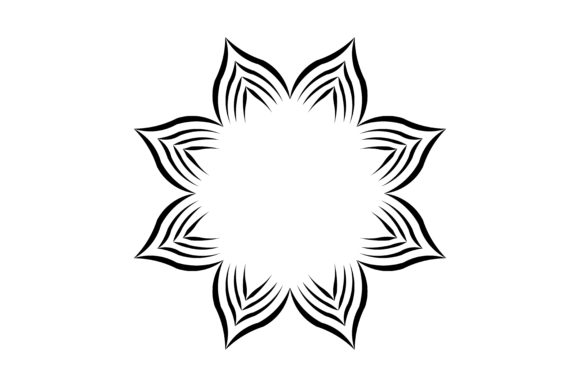
The mandala of abstract polar vector set 13 and the broader concept of the mandala of abstract polar vector represent a fascinating intersection of mathematical precision, artistic expression, and spiritual symbolism. These designs, characterized by symmetrical flower patterns on black and white backgrounds, have emerged as a compelling modern style that combines ornate detailing with minimalist monochrome aesthetics. To truly appreciate these intricate compositions, it helps to understand where they come from, how they are constructed, and why they matter in today's creative and practical landscape.
What Is a Mandala of Abstract Polar Vector?
At its core, a mandala of abstract polar vector is a geometric arrangement built around a central point, using polar coordinates to generate repeating, radially symmetrical patterns. Unlike traditional mandalas that might rely on hand-drawn curves and organic shapes, the polar vector approach uses mathematical vectors—lines with both direction and magnitude—to define each element's position and orientation. This method allows for precise, repeatable, and infinitely scalable designs that retain their structural integrity no matter how much you enlarge or reduce them.
The term "abstract polar vector" signals that these designs are not meant to represent literal flowers or objects. Instead, they distill natural forms into pure geometric relationships: petals become arcs defined by angular increments, centers become nodes where vectors converge, and symmetry emerges from systematic rotations around a central axis. Set 13, in particular, refers to a specific collection or configuration within this design language, often featuring a distinctive balance between dense ornamental zones and open, breathable spaces.
The Mathematical Foundation: Polar Coordinates and Vectors
To understand how these mandalas work, it helps to think in terms of polar coordinates instead of the familiar Cartesian grid. In a polar system, every point is defined by a distance from the center (radius) and an angle from a reference direction. When you systematically vary the radius and angle while applying vector transformations, you create patterns that naturally radiate outward. The "vector" part adds directionality—each petal, line, or curve has a specific orientation and magnitude, which gives the design its dynamic, flowing quality even within a rigid symmetrical framework.
This mathematical underpinning is what makes the mandala of abstract polar vector set 13 so visually satisfying. The human brain is wired to recognize symmetry and repeating patterns, and these designs trigger that recognition at a fundamental perceptual level. The black on white color scheme further strips away any distraction, allowing the pure geometry to speak for itself.
Why Abstract Polar Vector Mandalas Matter in Modern Design
You might encounter these mandalas in contexts as varied as wallpaper patterns, yoga studio decor, textile prints, wrapping paper, embroidery designs, and digital illustrations. Their appeal is not accidental. The black on white monochrome treatment gives them a timeless, graphic quality that works across media, while the floral symmetry taps into a universal visual language of growth, balance, and harmony.
For designers and creators, the mandala of abstract polar vector offers several practical advantages:
- Scalability: Because the design is vector-based, it can be resized without loss of quality, making it suitable for everything from small embroidery motifs to large-format wall murals.
- Repeatability: The radial symmetry means the pattern can be tiled or extended seamlessly, perfect for textiles and wallpapers.
- Versatility: The monochrome palette fits into almost any color scheme or interior design style, from minimalist to maximalist.
- Focus and Calm: The intricate, orderly structure naturally draws the eye inward, making these designs ideal for meditation aids, yoga mats, and mindfulness tools.
Practical Applications Across Industries
Let's explore how these designs translate into real-world use. In textile design, the mandala of abstract polar vector set 13 can be printed on fabric for clothing, upholstery, or decorative pillows. The black on white contrast ensures the pattern remains crisp even after repeated washing, and the symmetrical flower motifs create a sense of luxury and intentionality. For wallpaper and backgrounds, the same design can transform a plain wall into a focal point without overwhelming the space—the monochrome treatment keeps it sophisticated rather than busy.
In the world of yoga and wellness, these mandalas are particularly valued. Practitioners often use them as visual anchors during meditation or as printed designs on mats, towels, and studio walls. The repeating, centered pattern encourages focused attention and a sense of groundedness. The abstract nature means it doesn't prescribe any specific cultural or religious meaning, making it accessible to people from diverse backgrounds.
For illustration and print work, the mandala of abstract polar vector provides a ready-made element that can be incorporated into larger compositions. Graphic designers might use it as a background texture, a border motif, or a standalone art piece. Because the design is vector-based, it can be edited, recolored, or combined with other elements without degradation.
In embroidery and wrapping, the intricate yet orderly pattern translates beautifully into thread or paper. The black on white scheme offers high contrast that reads clearly at different scales, and the floral symmetry feels both organic and structured—a combination that appeals to crafters and DIY enthusiasts.
Understanding the Monochrome Aesthetic
One common misunderstanding about the mandala of abstract polar vector set 13 is that the black on white treatment is purely a stylistic choice or a limitation. In reality, the monochrome palette is integral to the design's effectiveness. By removing color, the viewer's attention is directed entirely to the structure, line quality, and spatial relationships within the mandala. This is especially important for a design that relies on precision and symmetry—color can sometimes obscure or compete with the geometric clarity.
Moreover, black on white is the most versatile combination for reproduction. It prints cleanly on any printer, photographs well, and works across digital and physical media. It also aligns with the "modern style of ornate isolated" description: the ornate detail is allowed to shine precisely because the background is neutral and the foreground is bold.
Clarifying Common Assumptions
Some people assume that these mandalas are purely decorative and carry no deeper meaning. While it's true that the abstract polar vector approach prioritizes geometry over symbolism, the very act of creating or observing a symmetrical, centered pattern can be a meditative practice. The repetition, precision, and balance inherent in the design process mirror the qualities that many people seek in mindfulness and focus work.
Another assumption is that the "set 13" designation implies a rigid, unchangeable formula. In practice, "set 13" refers to a particular configuration within a larger design system—one that has proven especially popular due to its harmonious proportions and adaptable structure. Designers often use it as a starting point, modifying elements while preserving the core symmetry.
How to Create Your Own Abstract Polar Vector Mandala
While the technical creation of these mandalas typically involves vector graphics software like Adobe Illustrator or open-source alternatives like Inkscape, the underlying process is accessible to anyone interested in geometry and design. Here is a simplified overview of how a designer might approach creating a mandala of abstract polar vector set 13:
- Establish the center: All polar vector mandalas begin with a central point that serves as the axis of rotation.
- Define the symmetry: Choose the number of rotational divisions (e.g., 6-fold, 8-fold, 12-fold symmetry). Set 13 often uses a 12-fold symmetry, which creates a dense, flower-like appearance.
- Create a single wedge: Design one repeating segment that spans the angle between two symmetry lines. This wedge contains all the vector elements—arcs, lines, curves—that will be replicated.
- Apply vector transformations: Use rotation, scaling, and reflection tools to duplicate the wedge around the center. The "polar vector" aspect ensures that each element maintains its directional relationship to the center.
- Refine and detail: Add layers of ornamental detail within the wedge, balancing dense areas with negative space. The black on white treatment means that both positive and negative shapes are equally important.
- Review and adjust: Check for visual balance, ensuring that no single area feels too heavy or too empty. The goal is a harmonious, cohesive pattern that reads as a unified whole.
For those who prefer not to design from scratch, pre-made vectors and templates for the mandala of abstract polar vector set 13 are widely available from stock graphics websites. These can be customized by adjusting scale, rotation, and color, or by combining elements from different sets to create unique compositions.
The Broader Context: Why Symmetry Matters
The mandala of abstract polar vector is part of a larger human fascination with symmetry that spans cultures and millennia. From Islamic geometric patterns to Celtic knotwork to Renaissance rose windows, symmetrical, centered designs have been used to represent order, unity, and the cosmos. The modern iteration, with its vector precision and monochrome palette, updates this tradition for contemporary tastes while preserving the essential qualities that make these patterns so compelling.
In an age of digital distraction, the clarity and focus of a black on white mandala can serve as a visual anchor. Whether you encounter it on a yoga mat, a wallpaper pattern, or a printed illustration, the mandala of abstract polar vector set 13 invites you to pause, look inward, and appreciate the beauty of structured simplicity. Its ornate detailing rewards close inspection, while its overall symmetry makes it instantly legible from across a room.
Conclusion: A Design for Many Purposes
The mandala of abstract polar vector set 13 and the broader category of abstract polar vector mandalas represent a design approach that is simultaneously ancient and contemporary, mathematical and artistic, practical and spiritual. Its black on white, symmetrical flower motifs offer a modern style of ornate isolation that works across media—from digital illustration to textile printing to embroidery and beyond. Whether you are a designer seeking versatile vector assets, a yoga practitioner looking for focal imagery, or simply someone who appreciates the elegance of geometric patterns, these mandalas provide a rich and rewarding visual experience.
Understanding the polar coordinate foundation, the role of vectors, and the intentional use of monochrome helps demystify the design while deepening appreciation for its subtlety. The next time you see a mandala of abstract polar vector set 13, you will recognize not just a beautiful pattern, but a carefully constructed system of relationships—a balance of line, space, and repetition that speaks to our innate love of order and harmony.